Skip to content

Remediation of legacy impacts associated with firefighting foam use

Overview

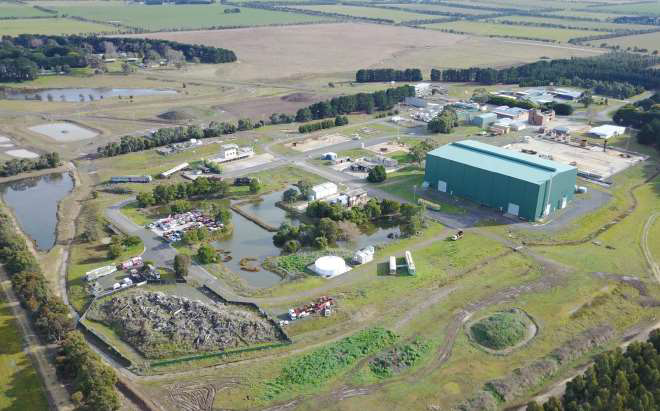
Senversa supported CFA in the decontamination of the 150ha Former CFA Fiskville Training College. From 2014 Senversa has been addressing widespread PFAS contamination in soil, sediment, surface water, and groundwater. The site, previously Victoria’s largest firefighter training facility, was closed in 2015 to enable remediation of legacy impacts associated with historical firefighting foam use.

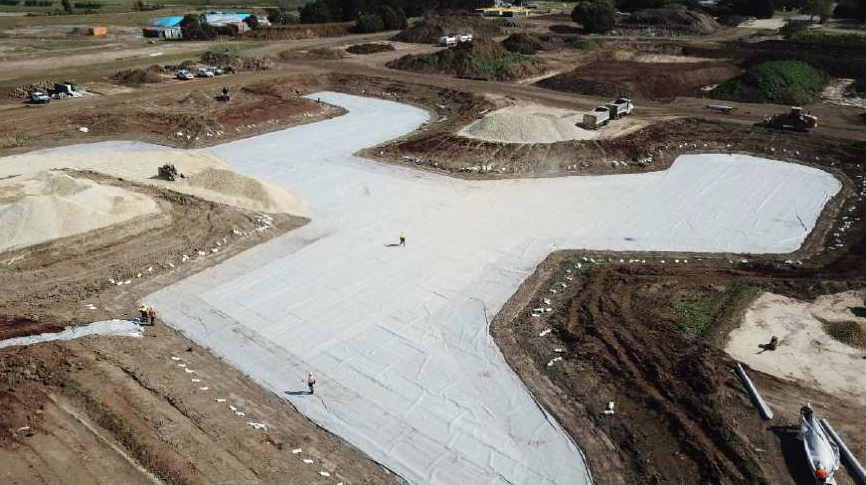
The adopted remediation strategy focused on hydraulically isolating the central training grounds from the surrounding environment and consolidating impacted materials within a 10 ha In-situ Soil Management Area (ISSMA). This involved large-scale earthworks, water body removal, and the installation of a robust geosynthetic capping system (deployed in part due to the lack of locally available clay-rich soils). Senversa provided end-to-end services including remediation strategy development, regulatory approvals, preparation of technical specifications, contractor procurement support, and construction-phase design, supervision, and validation. Risk assessment inputs ensured the final site condition met regulatory requirements for suitability of use.


Challenge

The Fiskville project involved several significant technical, regulatory, and stakeholder challenges:

  • First large-scale PFAS remediation in Australia, requiring development of risk-based approaches prior to release of the PFAS National Environmental Management Plan (NEMP).
  • Extensive regulatory engagement with the Victorian EPA and independent auditor across all phases, including approvals for waste management, water treatment, asbestos handling during the removal of two old landfills at the site, and addressing off-site impacts.
  • Complex technical delivery involving containment design, large-scale soil movement, and treatment of contaminated water under varying site conditions.
  • Strict EPA notice timeframes, necessitating timely delivery of works and reporting to avoid additional regulatory action.

Outcome

The project achieved significant environmental and compliance outcomes:

  • Successful in-situ management of over 170,000 m³ of PFAS-impacted soil beneath a geosynthetic cover system.
  • Treatment of approximately 57 megalitres of contaminated water to <0.002 µg/L (total PFAS) prior to discharge to the local waterway.
  • >1,000 soil verification samples; >500 individual environmental consultant and engineering deliverables; >140 stockpile and engineering fill classification representing 107,000m3 of materials.
  • Completion of remediation works in April 2021, with the site deemed “Cleaned Up to the Extent Practicable” by the Victorian EPA.
  • Independent environmental audit completed in May 2021 confirming site suitability for use.
  • Ongoing post-rehabilitation monitoring, including groundwater and surface water assessment and ISSMA aftercare.

Impact

The Former CFA Fiskville remediation project demonstrates Senversa’s capability to deliver complex, multidisciplinary environmental rehabilitation works involving significant contamination, regulatory oversight, and stakeholder engagement.

The project successfully achieved remediation objectives within stringent timeframes while maintaining compliance with EPA and auditor requirements. Importantly, the project pioneered practical, risk-based PFAS management approaches in Australia, contributing to the development of national guidance under the PFAS NEMP and setting a benchmark for similar remediation projects. Senversa’s approach integrating engineering, environmental science, and risk assessment enabled the delivery of a robust and defensible outcome.  


The Team

Connect to learn more about their experience.

Michael Rehfisch

Michael Rehfisch

Senior Principal

auditors-compressed

Have a project in mind?

Start a conversation